
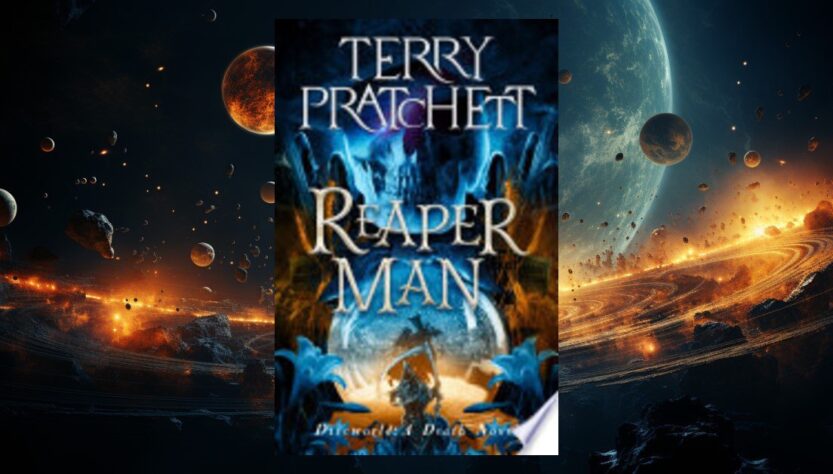
Review
Coming straight after Moving Pictures by Terry Pratchett, Reaper Man feels like Discworld changing gear again. The Holy Wood book sprawls on purpose, all glamour, spectacle, and stories mutating reality. This one turns inward. It is funnier than its premise ought to allow, but it is also one of the first Discworld novels that really makes room for melancholy, kindness, and the strange dignity Pratchett finds in ordinary lives.
The obvious draw is Death himself. Mort made him memorable; Reaper Man makes him indispensable. Pratchett takes the best joke in the series, a seven-foot skeleton who speaks in capital letters and has better manners than most humans, then asks what happens when that figure is forced to live with limits. Bill Door is such a good conceit because it never feels like a gimmick. Watching Death try to understand labour, routine, weariness, and companionship gives the book its heart, and Miss Flitworth is crucial to that. Their scenes together are funny in a dry, awkward way, but they are also where the novel earns its emotional weight.
What stops the book becoming too wistful is that the other half is gloriously daft. Windle Poons refusing to stay properly dead, Reg Shoe turning undeath into a political movement, and Ankh-Morpork being threatened by snow globes, shopping trolleys, and a deeply unpleasant kind of retail logic all sound like Pratchett throwing ideas at the wall. Somehow it works. The Unseen University scenes have exactly the right level of academic incompetence, and the whole subplot has that lovely Discworld trick of being absurd on the surface while taking a proper swing at something real underneath. In this case it is consumerism, urban drift, and the way people can normalise almost anything if it arrives with enough convenience.
Having read well beyond this point in Discworld, I do not think Reaper Man is quite as cleanly built as the very best later books. You can feel the join between the Bill Door material and the wizard, undead, and shopping centre chaos more than you do in something like Small Gods or Night Watch, where every thread locks together with terrifying confidence. There are stretches where one storyline is plainly stronger than the other, and if I am honest, the emotional core carries the satirical side more than the other way round.
Even so, this is one of the books that explains why Death becomes such a beloved presence across the whole series. Pratchett is not just making him funny; he is making him morally serious. Reaper Man has the jokes, the footnotes, the visual silliness, and the usual delight in language, but it also has a sharper idea than some of the earlier novels about what Discworld can do when it stops being a fantasy parody machine and starts asking bigger questions. If you liked Mort for introducing Death, this is the book that deepens him. If you liked later Pratchett for mixing warmth, satire, and philosophy without becoming self-important, you can see that blend clicking into place here.
Alex gave this four stars, and that feels right. It is not quite top-tier Discworld for me either, because the split structure is a little ungainly and one half of the novel is clearly doing more of the heavy lifting. But the best parts are superb. Bill Door and Miss Flitworth are among the warmest things Pratchett wrote in this era, and the whole novel has that rare trick of making you laugh at something ridiculous, then making you sit with it for a second because it has unexpectedly wandered into truth.
If your favourite fantasy has room for existential dread, agricultural labour, undead unionising, and shopping trolleys that feel faintly apocalyptic, this is very much your sort of thing.
Rating: 4/5
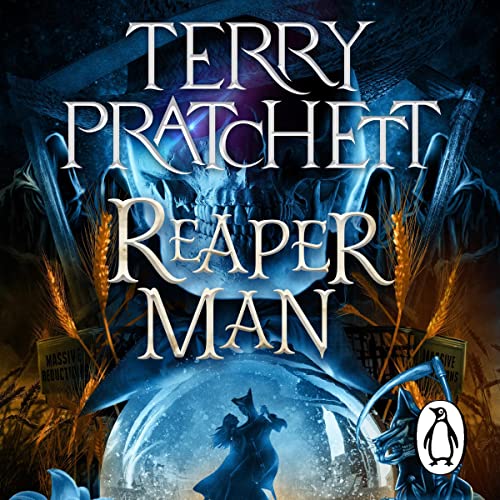
The Audible UK edition is narrated by Sian Clifford, Peter Serafinowicz, and Bill Nighy, and runs to 8 hours and 54 minutes.
Discover more from Unfolded Universe: Sci-Fi Book Reviews
Subscribe to get the latest posts sent to your email.